


TickPick - Live Event Tickets
TickPick LLC
I usually decide whether an event app deserves a permanent place on my phone after the first burst of excitement wears off. TickPick - Live Event Tickets made a strong first impression because it puts concerts, sports, theater, and upcoming events into one shopping experience without charging for the app itself. I found it most useful when I already had a rough plan—such as looking for a game this weekend or checking whether a concert fit my budget—rather than when I wanted to browse endlessly with no idea what to attend.
That distinction matters. An event marketplace can be fun for ten minutes and still become clutter a week later. In my experience, this one has a better chance of staying useful because ticket hunting comes in cycles. I may ignore it for several weeks, then open it when friends suggest a show or when I suddenly want to make a weekend plan. Its value is less about daily entertainment and more about reducing the work involved in making those occasional decisions.
From quick discovery to a practical ticket routine
Why the first week feels useful
The first thing I noticed was how naturally the app fits a common planning question: “What can I actually go to?” Instead of moving between separate team pages, venue calendars, concert listings, and theater sites, I could use one place to explore different kinds of live events. That makes the app especially appealing for people whose interests change from week to week.
I also liked approaching it as a comparison tool rather than treating it as a place to make an impulse purchase. If I knew the event, I could investigate ticket choices. If I only knew the general activity—live music, a game, or a stage production—I could browse for possibilities. That two-way use is more valuable than a simple calendar because it supports both planned purchases and spontaneous ideas.
The app is free, which lowers the barrier to trying it. TickPick LLC is the developer, and the product has been available since November 6, 2014. That long presence gives it the feel of an established ticket-shopping service rather than a short-lived discovery experiment. It is also rated for Everyone, so the interface is suitable for a broad audience, although the events themselves naturally vary in suitability and atmosphere.
Related News

Instagram Is No Longer a Photo App. It Is an Attention Engine

Microsoft Teams Mobile: When Collaboration Becomes Navigation

How the NFL App Adapts to Android and iOS Updates

Temu: Elevate Your Shopping Experience to Billionaire Status

Why Traffic Rider Works Best as a Precision Reflex Game

How Google’s Find Hub Transforms Everyday Searches
During an ordinary first-week test, I would not judge it by how many events I can scroll past. I would judge it by how quickly I can narrow a vague plan into something actionable. For example, if a friend says they want to see a basketball game but has not chosen a date, I can use the app to inspect the available schedule and compare possibilities before the group starts debating across several messages.
That workflow is one of its less obvious strengths. The app can become a shared starting point for a conversation. I can check an event, discuss the date and seating idea with friends, then return to the same search instead of reconstructing the research from memory. It does not eliminate the need to coordinate, but it makes the information-gathering part less scattered.
How I would use it for a real weekend plan
Imagine that I am arranging a Saturday outing with two friends. We have a flexible budget, but we do not want to spend the entire evening searching. I would begin by browsing upcoming events, then separate “interesting” from “realistic.” A theater option might be convenient but too formal; a concert might have the right energy but the wrong date; a sports event might work because the group can arrive without planning every minute.
Gallery
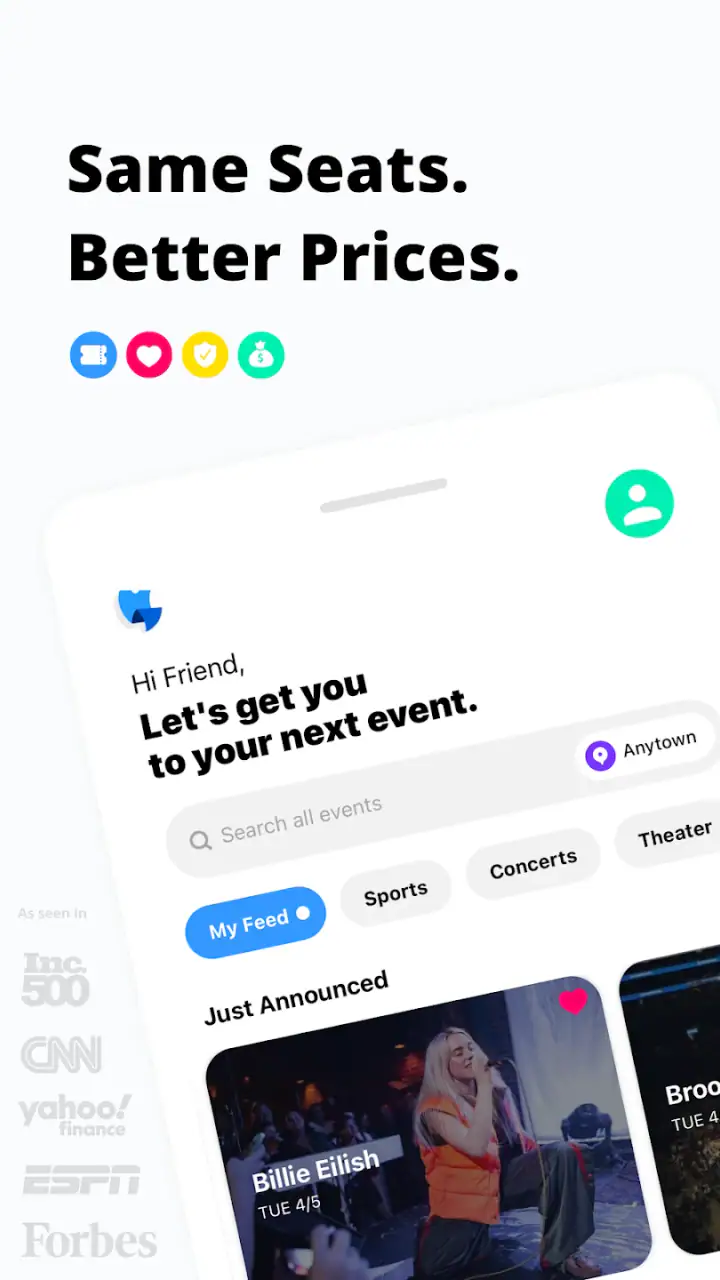
Once the shortlist is small, I would compare the total commitment rather than focusing only on the ticket itself. The time of the event, the location, the seating situation, and the group’s willingness to travel all matter. TickPick helps with the ticket-shopping portion, but it cannot make those personal trade-offs for me. That is why I see it as a decision aid, not an automatic itinerary builder.
A useful habit is to avoid opening the app with a single fixed answer in mind. If I decide that only one exact date will work, I may miss a more suitable event nearby. On the other hand, browsing without any limits can encourage overthinking. I get better results when I set two boundaries before searching: the type of event I want and the maximum amount of time I am willing to spend comparing options.
The app’s store rating is 4.8 from around 49 thousand ratings, and it has passed one million installs. Those figures suggest that it has reached a substantial audience, but they do not replace my own checks before buying. I still review the event details carefully and make sure the selected date, venue, and ticket information match what my group expects.
Where it beats the usual alternatives
The usual alternative is to go directly to a team, artist, venue, or theater website. That approach can be better when I already know exactly where I want to buy and want the most direct relationship with that organization. It can also be more comfortable for someone who dislikes comparing listings across a marketplace.
TickPick is more convenient when the event is not yet decided. Its broader event focus means I can move from sports to music or theater without changing my research method. That cross-category flexibility is the reason I would install it even if I only attend a few events each year.
Another alternative is a general web search. Search engines are useful for discovering names and dates, but the results can be fragmented, outdated, or mixed with articles that are not immediately useful for purchasing. An event-focused app gives the search a clearer purpose. I spend less time figuring out which page is relevant and more time deciding whether the event suits me.
Still, direct venue or organizer channels may be preferable for highly specific needs. If I care about a venue’s own seating map, accessibility information, membership benefits, or a particular box office process, I would verify those details through the relevant official source before committing. TickPick is strongest at helping me shop and compare, not at replacing every piece of event research.
The value that remains after the novelty fades
After the first month, the app’s value depends on whether I treat it as a recurring planning tool. I do not need to open it every day. In fact, daily browsing would probably make the experience feel repetitive and encourage me to consider events I never intended to attend. Its lasting role is more practical: open it when a trip, birthday, date night, group outing, or free weekend creates a reason to look.
This is where the app differs from entertainment apps built around constant consumption. TickPick does not need to become a daily habit to justify itself. I would keep it installed because it shortens a task that returns throughout the year. When a real occasion appears, I already know where to begin.
For frequent attendees, the recurring value is easier to see. Someone who regularly goes to games, concerts, and theater can use one app to revisit the same kind of search across different events. The benefit is not necessarily that every purchase will be cheaper or easier; it is that the comparison process becomes familiar. Familiarity matters when a group is waiting for an answer and nobody wants to spend an hour opening unrelated pages.
For occasional attendees, the value is more conditional. If I attend one event every couple of years and already know the exact box office I prefer, the app may not change much. In that situation, installing another marketplace can add a step rather than remove one. I would recommend it more strongly to people who are open to several event types or who often need to compare options before deciding.
One practical long-term workflow is to use the app at the planning stage, then stop browsing once the group has agreed on a realistic choice. This sounds obvious, but it prevents the endless-search problem. More listings do not always create a better decision. I find the app most helpful when it moves me toward a choice instead of becoming the choice itself.
What maintenance actually involves
The maintenance burden is fairly light because the app is free and does not need to be part of my daily routine. I would keep it updated so the current version—5.0.58—remains available on a compatible device. It supports Android 8.0 and later, which is useful for people who do not replace their phone frequently, though anyone using an older system should check compatibility before planning around it.
My main maintenance task would be keeping my expectations organized. The app can show opportunities, but I still need to check the details that matter to my particular outing. Before finalizing anything, I would confirm the event name, date, venue, seating choice, and the final amount shown during the purchase process. Ticket decisions are too important to make from a quick glance at a search result.
I would also avoid leaving half-formed searches open for too long. Events change, availability changes, and my friends’ plans change. A saved mental shortlist can become irrelevant quickly. When I return after a break, I prefer to start with the current event details rather than assuming that an earlier option is still the best one.
There is a small organizational advantage to separating “research” from “buying.” On the first pass, I compare event possibilities and identify what fits. On the second pass, I recheck the exact selection before purchase. This two-step approach reduces the chance that excitement over a performer or team makes me overlook an inconvenient date or unsuitable seat.
That discipline is especially important for group purchases. I would send friends the exact event and seating information I am considering, ask for agreement, and only then proceed. The app can make discovery faster, but it cannot prevent a group from choosing different dates or assuming that “near the stage” means the same thing to everyone.
Where fatigue can set in
The biggest source of fatigue is choice. A broad event marketplace is useful when I want alternatives, but it can become tiring when I am trying to make a quick decision. Browsing sports, concerts, and theater in the same general environment may inspire ideas, yet it can also pull me away from the simple question of what fits this particular evening.
I also find that ticket shopping can create a false sense of progress. Looking at listings feels productive, but I may still be no closer to a plan if I have not established a date, budget, or preferred area. My solution is to define the decision before opening the app. If I cannot state what I am comparing, I limit the browsing session and return later with a clearer purpose.
Another possible frustration is that an event marketplace is not the same as a personal calendar. It helps me find and evaluate live events, but I still need to manage invitations, travel, reminders, and the rest of the outing elsewhere. Someone looking for a complete social-planning system may find the experience incomplete. I would pair it with the calendar and messaging tools I already use rather than expecting one app to handle the whole evening.
Price-sensitive users should be particularly careful about stopping at the first attractive number. I would review the purchase summary and understand what I am paying before completing the transaction. The app’s purpose is to help with ticket shopping, but responsible comparison still belongs to me. A low-looking starting figure is not enough reason to skip the final review.
There is also a difference between discovering an event and getting the exact experience I want. A listing may be perfect for a fan who only cares about attending, while another person may care deeply about sightlines, proximity, accessibility, or a specific entrance. If those details determine whether the night succeeds, I would use TickPick for initial comparison and then verify the important venue information through the appropriate source.
Who should keep it installed
I think the app is a good fit for people who attend live events regularly, compare several categories, or often organize plans for friends. It is also useful for someone who wants a single starting point when they are undecided between a concert, a game, and a theater outing. The free price makes experimentation easy, and the broad event focus gives the installation a purpose beyond one upcoming purchase.
I would be more cautious recommending it to a person who already has a trusted direct-buying routine and never compares alternatives. If that person knows the exact organizer, venue, date, and seat they want, going straight to the familiar source may be simpler. The app adds the most value when uncertainty is part of the task.
It may also be a poor match for anyone who gets stressed by browsing choices or tends to make impulse purchases after seeing an appealing event. In that case, the best approach is to use it only after setting a firm limit and a clear occasion. The app should support a plan, not manufacture one every time there is a free evening.
My long-term verdict
After the novelty fades, TickPick - Live Event Tickets still earns space on my phone because its usefulness returns whenever I need to investigate a live event. I would not describe it as an app I must open constantly, and that is not a weakness in this category. Its strongest role is occasional but meaningful: helping me move from a vague idea to a considered ticket decision without beginning the search from several unrelated websites.
The lasting benefit comes from its flexibility across concerts, sports, and theater, combined with a familiar workflow for comparing possibilities. The trade-off is that I must supply the judgment. I need to check the final details, manage group expectations, and know when browsing has stopped being useful. People who want a complete event planner or a direct venue-only experience may prefer another route.
For me, the app passes the long-term test when I use it deliberately. I would keep it installed, open it for real plans, compare with the direct source when the event has special requirements, and avoid treating endless discovery as the goal. Its recurring value is not constant novelty; it is having a dependable starting point when a live event is worth investigating.
With a 4.8 average and around 6.6 thousand written reviews, it has plenty of visible user feedback behind it, while its current free availability makes trying it low-risk. I would recommend it to a friend who wants more options than a single venue website provides, especially if that friend attends different kinds of events throughout the year. I would simply add one piece of advice: use it as a careful shopping companion, not as a substitute for reading the final ticket details.
FAQs for TickPick - Live Event Tickets
What is TickPick and how does it work?
TickPick is a mobile app that provides a platform for buying and selling tickets to live events, including concerts, sports, and theater shows. Unlike other ticket platforms, TickPick offers a no-fee policy, meaning the price you see is the price you pay. It features an innovative bidding system and a rating system to help users get the best deals.
Does TickPick charge any fees on ticket purchases?
No, TickPick is known for its no-fee policy, which sets it apart from many other ticket vendors. The price displayed is the final price, without any hidden charges. This transparency makes it easier for users to compare prices and know exactly what they will pay upfront.
How reliable is TickPick for getting valid and authentic tickets?
TickPick guarantees the authenticity of tickets purchased through its platform. They have a rigorous verification process to ensure that all tickets are legitimate and valid for entry. Additionally, TickPick provides customer support to address any issues that may arise, offering buyers peace of mind.
What is TickPick’s buyer guarantee policy?
TickPick offers a 100% BuyerTrust Guarantee, which protects users in case of any discrepancies. If an event is canceled and not rescheduled, customers are entitled to a full refund. The policy also covers instances where tickets do not arrive on time or are not valid for entry, ensuring a secure purchase experience.
Can I sell my tickets on TickPick if I can’t attend an event?
Yes, TickPick allows users to sell their tickets on the platform. You can list your tickets at a price you choose, and the app provides tools to help you set competitive pricing. Once your tickets sell, TickPick handles the transaction and transfer, making it a seamless process for sellers.
Pros
- No hidden fees
- ensuring transparent pricing.
- User-friendly interface for easy navigation.
- Access to a wide range of events globally.
- Detailed seat views for informed choices.
- Secure payment options for peace of mind.
Cons
- Limited customer support response times.
- Occasional app crashes on older devices.
- No option for ticket resale within the app.
- High demand events may sell out quickly.
- Limited promo codes or discounts available.


